Who it is for
Senior living, group homes, gated communities and HOAs, apartments, student housing, business centers, self-storage. Anywhere there are units to monitor and staff on site.
For communities with staff on site
Alarm Station is a touchscreen that turns your staff area into a monitoring station. Alarms arrive the moment they’re sent, with your own instructions.
Your staff knows the resident, not just the zone number. They can be at the door while a central station is still calling, or clear a false alarm before it becomes a fine.
Alert them first. Escalate to central second.
The demos
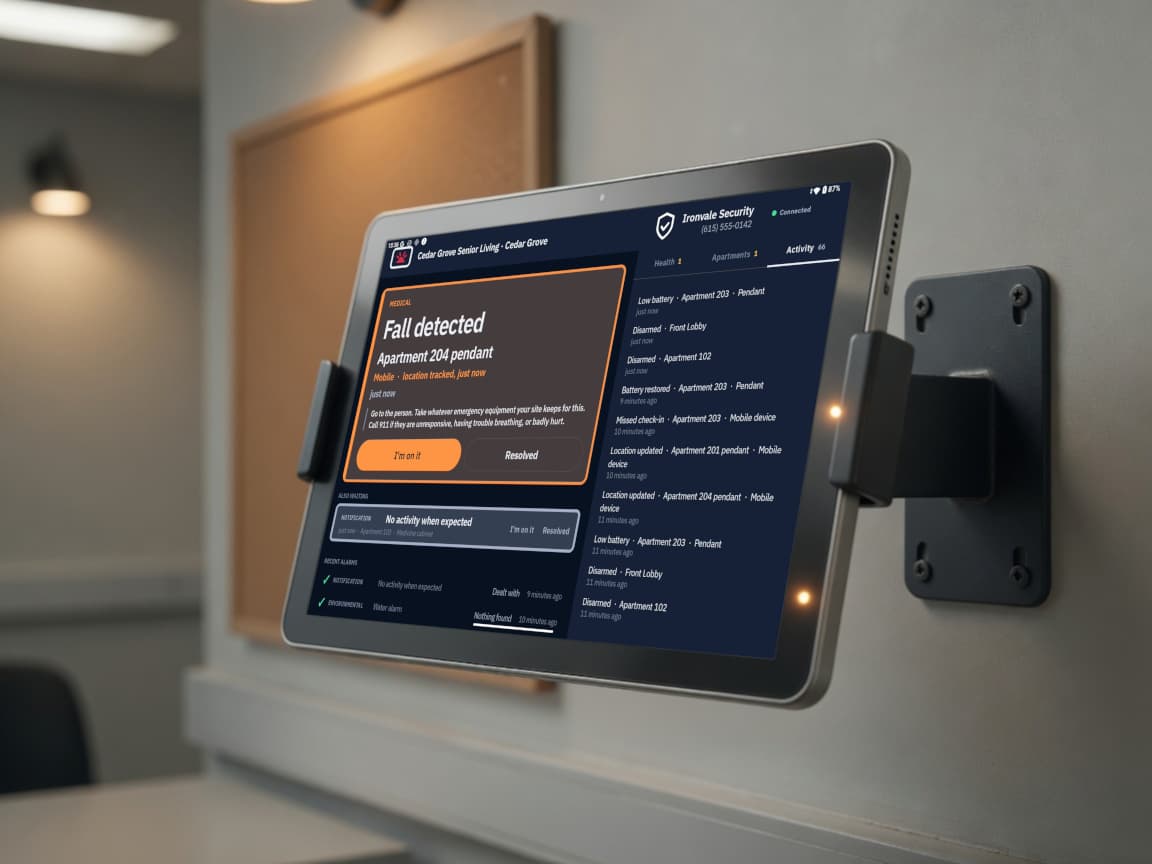
Cedar Grove, an eight-apartment care community, on a wall-mounted touchscreen branded by the alarm company that installed it. A fall in 204, a resident who pressed his mobile pendant while out getting groceries, three alarms arriving at once, and a good deal more.
Thornbury Gate, sixteen homes behind one entrance. A break-in, a camera that picks out somebody who should not be there, fire and carbon monoxide, a panic button, and water where there should not be any.
Neither community would see anything like this much in a few minutes. The demos compress a great deal of activity into a short run so you can watch how the screen behaves when things arrive together.
Try it yourself
Alarm Station is a free install from Google Play. Open it, choose a demo instead of typing a setup code, and you are looking at a working screen with alarms arriving on their own. No account, nothing to arrange.
It runs on any Android device, and a 10-inch tablet or larger shows the full layout.
Alarm Station
Each residence, suite, or unit has its own alarm system. Alarm Station puts those alarms on a screen at the nurse desk, the office, or the guard post, in language staff can read in the moment, with instructions on what to do written in plain English.
Senior living, group homes, gated communities and HOAs, apartments, student housing, business centers, self-storage. Anywhere there are units to monitor and staff on site.
A touchscreen that turns your staff area into a monitoring station. A tablet on a stand, or a smart screen on the wall. Alarms appear as they happen, with clear instructions what to do.
Staff sees the alarm first and can address the problem immediately, not after an off-site operator has worked its way down a call list. You can keep your central station as backup for when staff cannot respond.
Each unit keeps its own alarm system
Alarms arrive immediately
A record of who responded
Works alongside monitoring
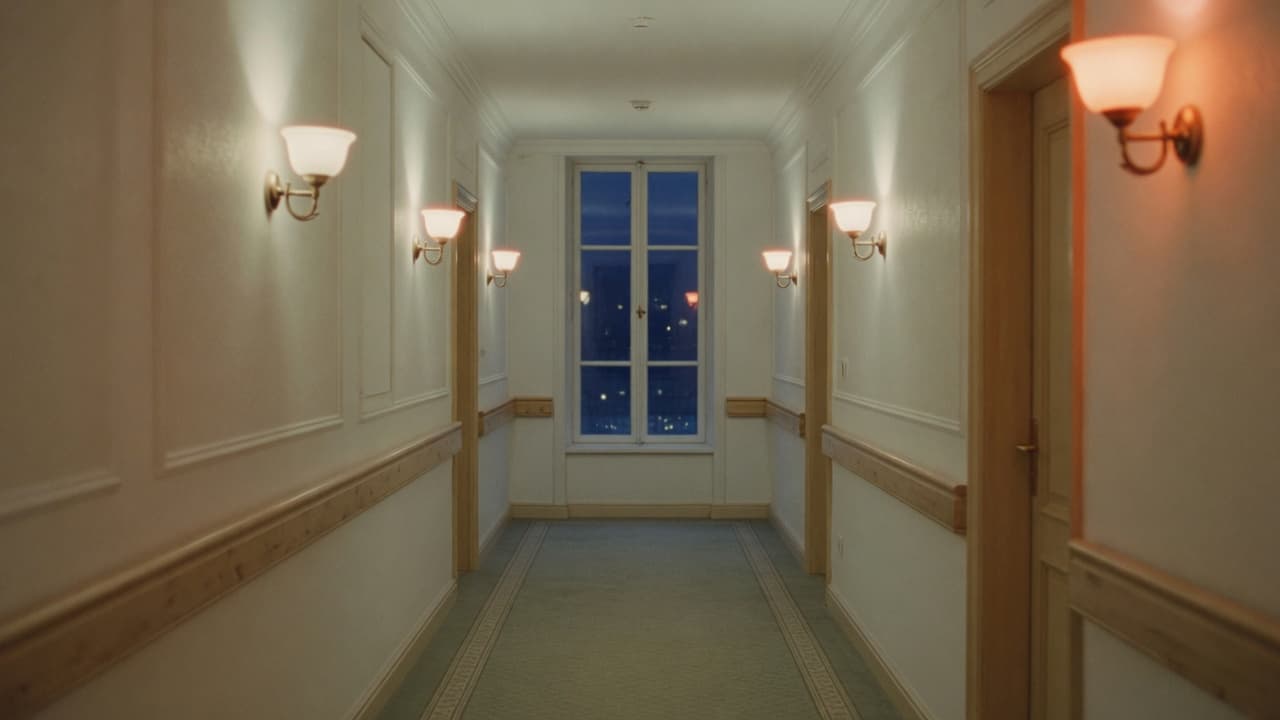
At 2:14am, the people already on site should be the first to know, not the last.
The signal already exists. It is already traveling.
The gap
An alarm travels at network speed. The minutes come from the human steps in the middle: a central station operator has to become available, and then somebody on site has to answer the phone.
A fall detector fires at 2:14am. The signal goes out to a monitoring center, waits its turn for an operator, and comes back as a phone call whenever that station’s protocol reaches your staff. The care assistant forty feet away is first in the response and last in the sequence.
What arrives is an account number and a zone, or a keypad code on a wall. Nobody off site knows that 214 sets this off every week, or that the resident in 118 walks at night. The context that decides whether this is an emergency is already on site, and none of it is in the signal.
A resident knocks their own pendant off the nightstand. A storage unit is opened by the person who rents it. Police and EMTs roll because the question never reached anybody on site, and the community pays twice: once in false alarm fines, and again in responders who stop treating the address as urgent.
Why it works
A care assistant who started last week will not learn software at 3am. If the screen is complicated, they walk past it. If it is two buttons and one sentence, they use it.
I’m on it. Resolved. There is no menu, nothing to log into, and nothing to remember. If something needs a person, the next step is obvious at a glance.
Medical alert from the app. Go to the person. Not a zone number, and not a code that means somebody disarmed their system. What happened, where, and what to do about it.
Nobody on your night shift asked for a new system, and none of them will read a manual. This is built so that the first person who walks up to it uses it correctly, without ever having been shown.
The touchscreen
An Android touchscreen at the nurse desk, the office, or the guard post. A tablet on a stand, or a smart screen on the wall. Always on, and never waiting to be opened.
Alarms never compete with noise
An open alarm holds the top of the screen until somebody takes it. A low battery or a power failure waits on a list of its own. Nobody scrolls past a beeping battery to find a medical alarm.
Plain language, and what to do
Burglary alarm, Unit 214, Front Door. Underneath it, the short instruction you wrote for that kind of alarm, so nobody has to decide what to do in the moment.
An alarm nobody takes does not sit there
Keep a central station behind your staff and anything still waiting after the delay you set forwards to them on its own. Nobody has to remember to escalate it.
It looks after itself
If anything goes wrong, the touchscreen tells you on its own display. It puts itself right as soon as it can. Nobody has to check on it, and nobody has to restart it.
How it works
01
An apartment, a house, a room: whatever your community counts in. Many already have one, and where they do not, your alarm company puts one in the way it always would.
02
The alarm appears on the touchscreen in the staff area the moment it is sent, with your own instructions for that kind of alarm.
03
They take it, handle it, and close it out. If nobody takes it, it can escalate to a central station as backup.
Alarm.com
A standard alarm account tells staff that something happened. An Alarm.com account can do a great deal more, and Alarm Station puts nearly all of it on the screen in the staff area.
Two-way voice opens on an alarm, through the alarm system or an IndiGo pendant. Listen-only on duress and panic, so nothing gives away that somebody is listening.
Video verification and remote video monitoring, with the clip that caused the alarm and a live view of the same camera.
Wellness activity, a missed check-in, a morning somebody did not get up. Fall detection and the Safety Button arrive as themselves.
Crash and smash, where the system was destroyed before it could report. Gunshot detection. Panic raised from a phone.
More about the Alarm.com integration →
If you are an Alarm.com dealer, start here →
Alarm Station is an independent product. It is not affiliated with, endorsed by, or certified by Alarm.com, and Alarm.com is their trademark.
Who it is for
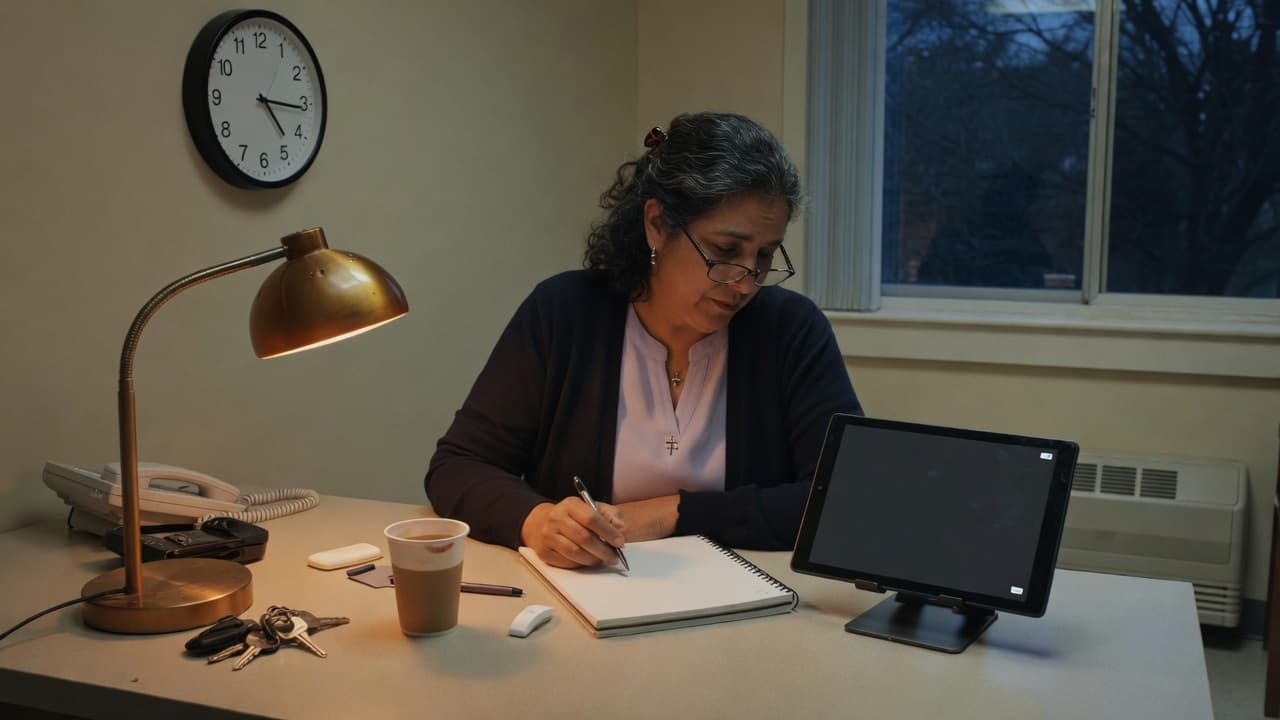
The nurse or caregiver at the desk. Senior living, assisted living, group homes.
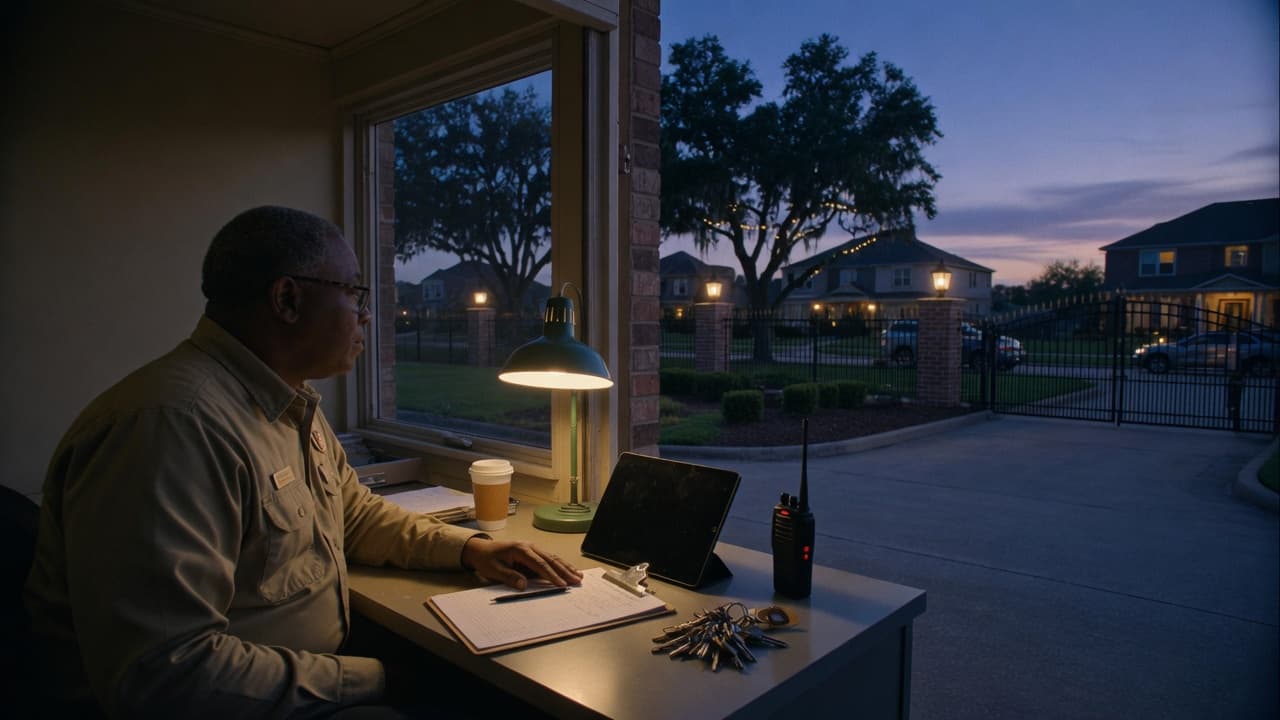
The guard at the gate. Guarded neighborhoods and homeowners associations, separate homes behind one staffed entrance.
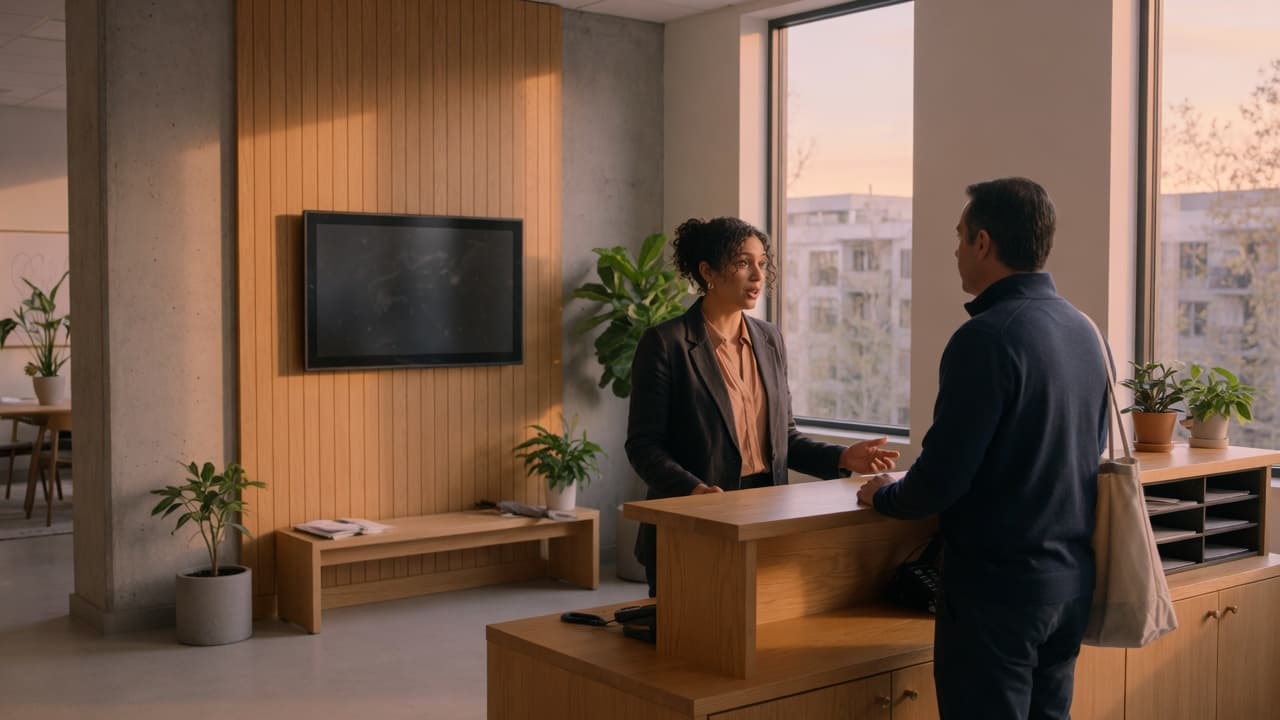
The front desk. Apartment complexes, condos and student housing.
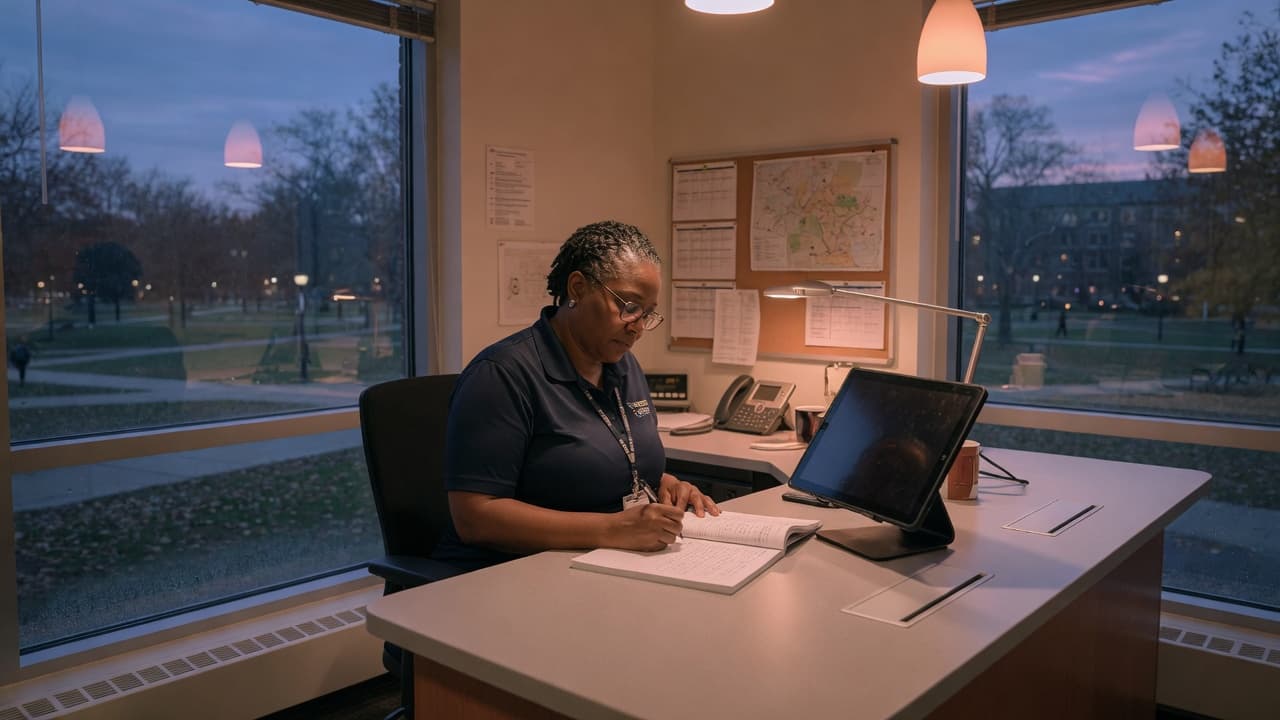
The facilities office, and the satellite posts. Schools and campuses, many buildings, one screen.
For dealers
No new system. Alarm Station attaches to the accounts you already monitor, and it is your name on the screen when staff looks up at 3am.
If you sell alarm systems, or you run a staffed community and wish the alarms showed up at the desk, we would like to hear from you.